









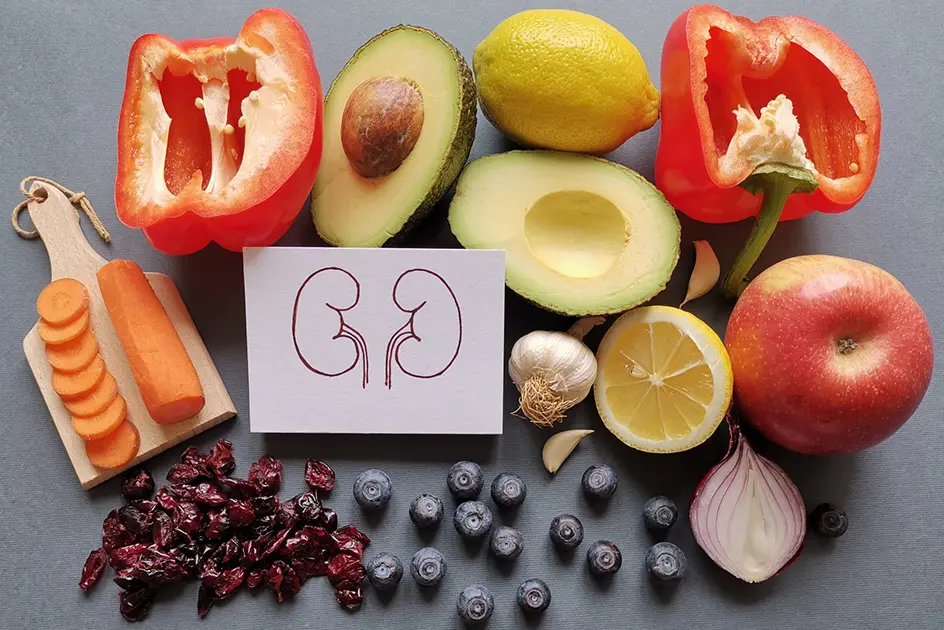





Most of us aren't hitting our daily fiber goals. According to the 2020-2025 Dietary Guidelines for Americans, more than 90 percent of women and 97 percent of men do not meet the recommended fiber intake. People with chronic kidney disease (CKD) eat even less fiber on average than the general population. Foods high in fiber are often high in potassium and/or phosphorus, so many people following a kidney diet fall short of hitting their fiber goals. Read on to learn why fiber is so important and how to incorporate more of it in your diet safely.
Understanding fiber
Fiber is an essential nutrient found in plants. It's generally defined as complex nonstarchy carbohydrates and lignin. Instead of being digested in the small intestine, it moves through the digestive tract to the colon, where the gut bacteria ferment it.
Fiber is found in fruits, vegetables, legumes (beans, peas, lentils), whole grains, seeds, and nuts.
There are two types of dietary fiber: insoluble and soluble. Both are important, but soluble fiber helps more with cholesterol and blood sugar control, and insoluble fiber helps bulk up stools and improve constipation.
Why is fiber important for people with chronic kidney disease?
Foods naturally rich in fiber are often nutritious and rich in vitamins and minerals. By adding more fiber-rich foods to your diet, you'll likely increase your overall diet quality. For people with kidney disease, eating a more nutritious, higher-fiber diet may slow the progression of CKD.
Overall benefits of adding more fiber to your diet:
- Promotes digestive health
- Improves the balance of bacteria in the gut
- Encourages regular bowel movements
- Aids in blood sugar control, which is important since diabetes is a leading cause of kidney disease
- Helps decrease cholesterol
- Lowers cardiovascular disease risk
- Makes you feel full and satisfied after meals
How much fiber should you eat per day
The Dietary Reference Intakes recommend consuming 14 grams of fiber per 1000 calories that you need per day. For a typical 2000-calorie diet, this would be ~28 grams of dietary fiber.
Estimated fiber needs are generally 25-28 grams per day for women and 28-34 grams per day for men.
Kidney-friendly sources of fiber
If you're in the early stages of chronic kidney disease, you may not need to worry about food restrictions. If you don't have any kidney diet restrictions, you should be able to eat fiber-rich foods from any food group.
In the later stages of CKD, you may have diet restrictions. Use caution when adding more fiber-rich foods, as they are often high in potassium. Take care to choose low-potassium fruits and vegetables whenever possible. While whole grains and legumes contain phosphorus, your body absorbs less phosphorus from plant-based foods than animal-based foods, so these foods may be less of a concern for you.
Lower potassium fiber-rich vegetables
- Green beans
- Broccoli
- Cabbage
- Cauliflower
- Corn
- Carrots
- Green peppers
- Eggplant
- Cabbage
- Zucchini/summer squash
Lower potassium fiber-rich fruits
- Apples
- Blackberries
- Pears
- Blueberries
- Raspberries
- Grapefruit
- Pineapple
- Tangerines
- Strawberries
How to increase fiber in your diet
If you suspect you're not eating enough fiber, start by slowly adding a serving or two of high fiber foods per day to your diet. It's important to increase fiber intake slowly because adding too much fiber at once may cause abdominal pain, constipation, or gassiness. If you have a fluid restriction, make sure you take it extra slowly, as fluids help move fiber through the digestive tract.
Dietary fiber is listed on the Nutrition Facts label on packaged foods, so check the label on foods you're eating to see how much fiber they contain per serving. For a food to be labeled "high fiber," it must contain 5 or more grams of fiber per serving.
Try some of these ideas to increase your intake:
- Add a high fiber cereal like shredded wheat or oatmeal to your breakfast
- Include at least ½ cup of a vegetable at lunch and dinner
- Choose lower potassium fresh fruit for a snack
- Try adding ½ cup of beans or lentils as your protein source at lunch or dinner in place of animal protein. Beans are easy to add to soups, pastas, or salads.
- Opt for a whole grain, like quinoa or brown rice, instead of white rice at a few meals per week.
- Eat a few cups of unsalted popcorn as a snack.
- Don't discard fruit peels – eat apple and pear peels since a lot of the fiber is in the peel.
- Skip fruit juices that have little or no fiber, and replace them with a serving of whole fruit instead.
Fiber supplements
Ideally, you would increase fiber in your diet through food, since fiber-rich foods are usually full of other healthy components. If you're unable to do this, perhaps due to poor appetite or dietary restrictions, a fiber supplement may be appropriate for you. Remember to check with your physician or healthcare provider before starting any supplements if you have kidney disease.
If your doctor says they're safe for you, fiber supplements are easy to find since they're readily available over the counter at pharmacies. Common types are made from psyllium husk, wheat dextrin, and methylcellulose.
Bottom Line
Fiber is an important nutrient for everyone and may offer additional benefits for people with kidney disease. Increase your intake of plant foods, including fruits, vegetables, legumes, whole grains, nuts, and seeds, to naturally boost fiber intake. Use some caution when adding more fiber foods since many are rich in potassium and/or phosphorus. Consider meeting with a registered dietitian for personalized help increasing fiber in your diet.